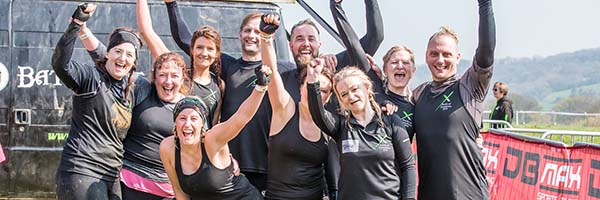
Obstacle course racing (OCR) demands a unique combination of strength, endurance, agility, and mental resilience. But what happens when your progress stalls, and no matter how much you train, you don’t see improvements? Hitting a plateau is common, even for experienced athletes. The key to breaking through is to introduce strategic changes to your training routine. Here’s how:
1. Reassess and Periodise Your Training
Many OCR athletes fall into the trap of repeating the same workouts without progression. To avoid stagnation:
- Introduce periodisation: Divide your training into cycles focusing on different aspects—strength, endurance, power, and recovery.
- Vary intensity and volume: Incorporate high-intensity interval training (HIIT) with low-intensity recovery sessions to optimise adaptation.
- Track your progress: Use a training journal or app to monitor gains and adjust accordingly.
2. Strength Training with a Purpose
OCR isn’t just about running; grip strength, core stability, and functional power are critical. If your strength has plateaued:
- Increase resistance: Progressive overload is key—gradually increase weights and repetitions.
- Train grip endurance: Dead hangs, towel pull-ups, and farmers’ carries will help you dominate rope climbs and monkey bars.
- Focus on unilateral movements: Single-leg squats, lunges, and one-arm carries help correct imbalances and improve coordination.
3. Enhance Running Economy
Running is a major component of OCR, and refining your technique can improve efficiency and speed.
- Incorporate hill sprints: Builds power and explosive strength for tackling inclines and obstacles.
- Utilise interval training: Alternating between sprint bursts and recovery jogs increases stamina and mental toughness.
- Train on diverse terrain: Running on trails, sand, or uneven ground strengthens stabilising muscles and reduces injury risk.
4. Train for Specific OCR Obstacles
If certain obstacles slow you down, tailor your training accordingly.
- Simulate real conditions: Practice on obstacles similar to those in upcoming races.
- Increase agility drills: Cone drills, ladder footwork, and lateral movements enhance quickness.
- Master efficient transitions: Work on moving seamlessly from running to climbing or lifting to conserve energy.
5. Optimise Recovery and Mobility
Recovery is just as important as training. If you’re constantly fatigued, your body isn’t adapting efficiently.
- Prioritise sleep: 7-9 hours of quality rest enhances muscle repair and mental sharpness.
- Implement active recovery: Yoga, mobility drills, and foam rolling prevent stiffness and improve flexibility.
- Use contrast therapy: Alternating hot and cold therapy reduces inflammation and speeds up recovery.
6. Sharpen Mental Resilience
OCR is as much a mental challenge as a physical one. To push past mental barriers:
- Visualise success: Mental rehearsal of obstacles can improve confidence and execution.
- Train in adverse conditions: Practice in mud, rain, or cold to build grit and adaptability.
- Adopt positive self-talk: Replace negative thoughts with affirmations to keep pushing forward.
Final Thoughts
Breaking through a training plateau requires a combination of strategic progression, targeted strength work, running efficiency, obstacle-specific training, recovery, and mental conditioning. By tweaking your approach and stepping outside your comfort zone, you’ll reignite progress and reach new heights in your OCR performance.
Are you stuck in a rut with your OCR training? Try these techniques and let us know what works for you!
Back to Blog